Artificial Intelligence and the Future of Mindful Health
How to Filter Health Information in the Age of Excess
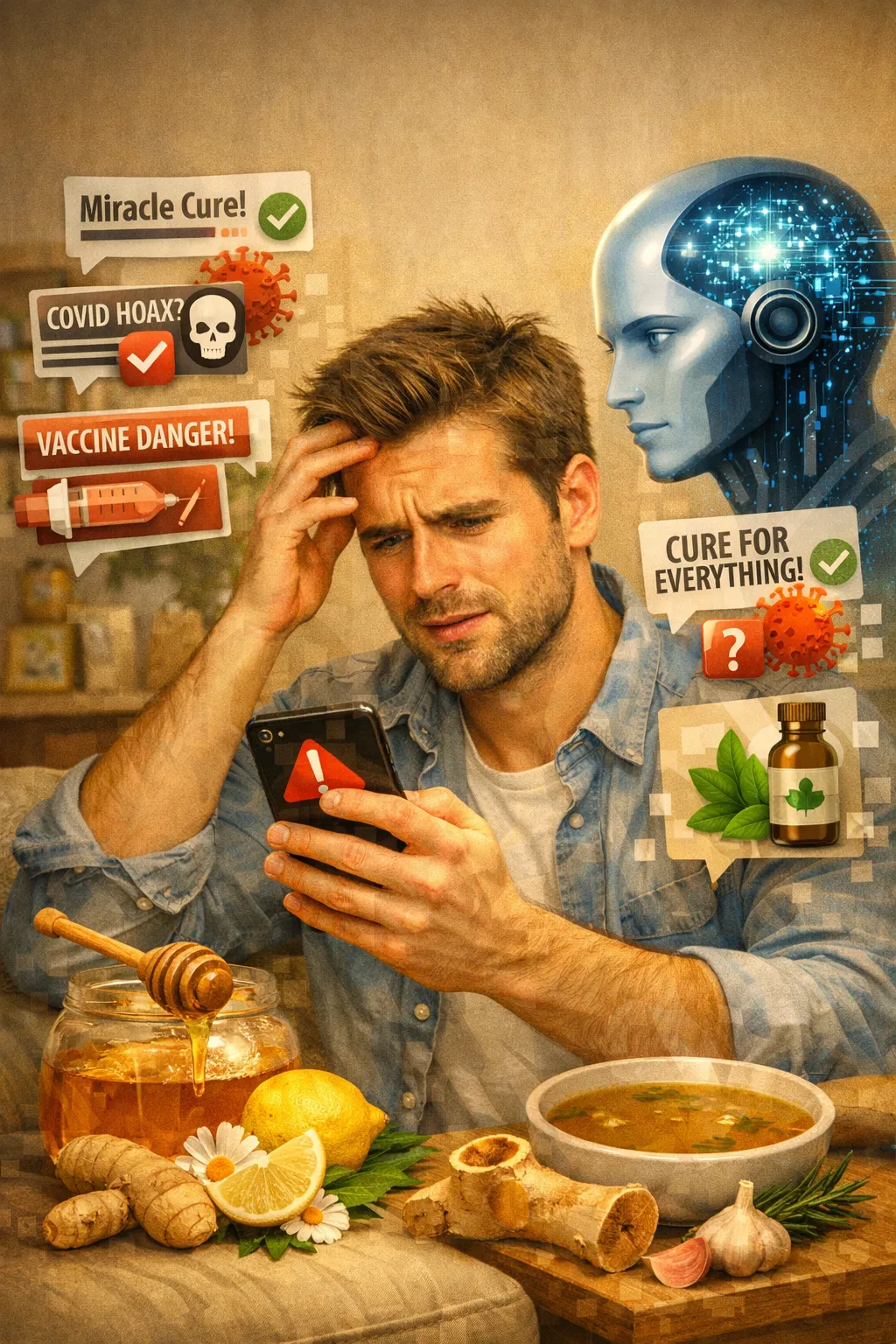
We live surrounded by miracle advice: social media, blogs, influencers, TikTok… everyone has the magic recipe. From drinking lemon water at 3:33 a.m. because it “raises your vibrations,” to impossible diets. And of course, we’ve all fallen for some fad. The problem is that so much information overwhelms us, and when we see that it doesn’t work, we lose faith in what actually has real backing.
AI as a Compass
Artificial intelligence can help you distinguish between science and fiction. There are apps that analyze studies and detect fake news. But be careful: AI doesn’t replace your judgment or your knowledge. It’s a tool, not an oracle.
The Myth of “Superfoods”
Classic example: açai. Instagram portrays it as a fountain of youth, but in reality, it’s a nutritious fruit, not magic. The term “superfood” is more marketing than science.
Influencer vs. Reliable Source
Typical influencer: advice without studies or Credentials.
Reliable sources: universities, hospitals, scientific journals, with verifiable references.
If someone says that prickly pear juice cures diabetes, look for evidence from institutions like the WHO or the ADA, not just on Google. This also applies to your pets.
Many apps recommend diets for dogs and cats. Some are helpful, others just sell "premium" kibble with trendy labels. It's better to prepare homemade food: you save money and provide real nutrition.
Practical Strategies
The three-source rule: Before believing a health claim, look for at least three reliable sources to back it up (for example, the National Autonomous University of Mexico (UNAM) or another prestigious institution or organization, the Ministry of Health, or a recognized hospital). If only an influencer says it, be suspicious.
The cultural filter: Take advantage of age-old wisdom and listen to your gut feeling. If your grandmother never heard of the "imported green superfood," but did hear about prickly pear cactus and beans, the latter probably has more historical and nutritional backing.
The test of time: What's trendy tends to fade quickly, what's scientific endures. Ask yourself: Is this health advice still valid after 5 years? If not, it will probably be forgotten.
Technology with awareness: Use health apps, but with discernment. They are tools, not oracles. If an app tells you that "you are dehydrated," compare it with the basics: Are you thirsty? Is your urine clear? Have you drunk water?
The family committee: Turn the search for information into a Teamwork. Have each family member bring a piece of information about a health topic and together decide which is most supported. This way everyone learns and no one falls for fake news on their own.
Common sense: If the advice sounds more like a magic ritual than science, it probably is. AI can help you filter, but your judgment is still the best tool.
