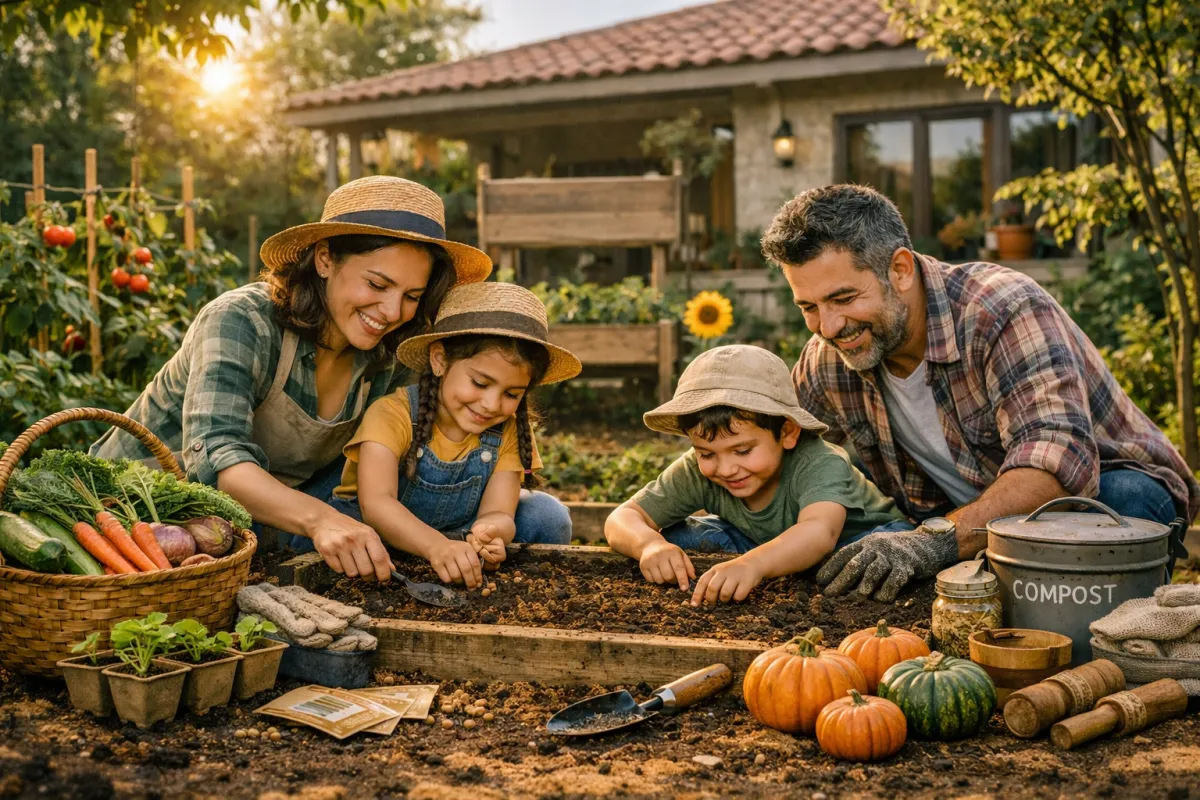
Earth Day
Sowing Awareness, Harvesting Health
Every April 22 we celebrate Earth Day, an international date that reminds us of the importance of caring for the planet, protecting the environment and preserving biodiversity. The first celebration was in 1970 in the United States, promoted by Senator Gaylord Nelson, and today the UN recognizes it as International Mother Earth Day.
Beyond the commemoration, this day invites us to reflect on concrete actions that we can take in our daily lives. Two of them are fundamental: cultivating family gardens and eliminating waste through recycling and conscious consumption.
Family Vegetable Gardens
Food production based on intensive livestock farming consumes enormous amounts of water, causes deforestation and generates methane, a greenhouse gas much more potent than CO₂. Faced with this unsustainable model, home gardens offer a practical and ecological alternative: they produce fresh food, reduce the carbon footprint and strengthen food sovereignty.
Key Benefits:
1. Concrete action: Every home-grown tomato means less transportation, less packing, and less pollution.
2. Cultural rescue: the “three sisters” method of planting corn, beans and squash together in mounds was a sustainable technique used by Native Americans.
3. Environmental education: sowing as a family teaches respect for nature and encourages healthy habits.
4. Health and sovereignty: ensures fresh, chemical-free food, and promotes a plant-based diet.
How to get started:
1. Use small pots with tomato, pumpkin or squash.
2. Make homemade compost with leftover fruits and vegetables.
3. Water with reused water, such as food rinse.
4. Try hydroponics if you're short on space: save up to 95% water.
Sowing a seed is more than an agricultural act: it is a symbol of hope and commitment to the planet. Discover delicious and nutritious recipes while eating consciously, without sacrifices.
Recycling and waste disposal
The average American generates approximately 4.9 pounds (about 2.2 kg) of municipal solid waste per person per day, according to the Environmental Protection Agency (EPA). Total US garbage generation amounts to over 292 million tons annually, while 75% of it is considered recyclable, only about 30% is recycled and about 62% going to landfills. That makes the United States one of the highest waste producer per person globally.
Plastic is the worst example: omnipresent in packaging and wrapping, it is produced in excess and very little is recycled. Gone are the paper cones and bulk sales; today almost everything is wrapped in bags, nets or plastic baskets.
Practical tips to reduce waste:
1. Buy in bulk and bring your own cloth bags.
2. Reuse glass jars for spices and food scraps.
3. Make broth with clean vegetable peels.
4. Plan menus with local and seasonal ingredients.
5. Chew slowly and enjoy traditional foods such as purslane, corn, and leafy greens.
6. Dedicate a day to preparing food for the week and get your family involved.
7. It includes homemade ferments such as tempeh, pickles or vegetable yogurt.
8. Reuse textiles: clothes, scraps, bedspreads.
9. Look for industrial recycling initiatives in your community.
Sustainability is not about inventing new things, it is about remembering what our ancestors were already doing.
Spiritual and ecological reflection
A garden with fruits and vegetables is a sustainable and peaceful option compared to raising animals for self-consumption, which requires enormous resources and generates pollution. Planting plants to feed ourselves directly strengthens ecology and self-sufficiency, while sacrificing animals contradicts the principles of sustainability.
From a spiritual perspective, respecting animal life is respecting our own. Philosophers such as Pythagoras and Tolstoy associated animal abuse with violence and war. Modern studies even show that communities with slaughterhouses have higher violent crime rates.
All beings share the same vital spark: harming an animal lowers our vibration and generates karma. Compassion should not be limited to pets, but should extend to cows, pigs, and fish. For Pythagoras, this respect was a necessary step for the human soul to reach higher levels of consciousness.
Let's take care of the planet EVERY day of the year
Earth Day reminds us that harmony with nature is critical for the future. Planting a vegetable garden at home and reducing waste are simple, accessible, and profoundly transformative actions.
In honor of this day, he rescues an ancestral practice: plant something, prepare a seasonal food or reuse a jar. Because taking care of the planet is also taking care of our conscience.
