Simple Guide to Understanding Labels Without Falling into Traps
Distinguish healthy, vegan and nutritious foods, and detect deception
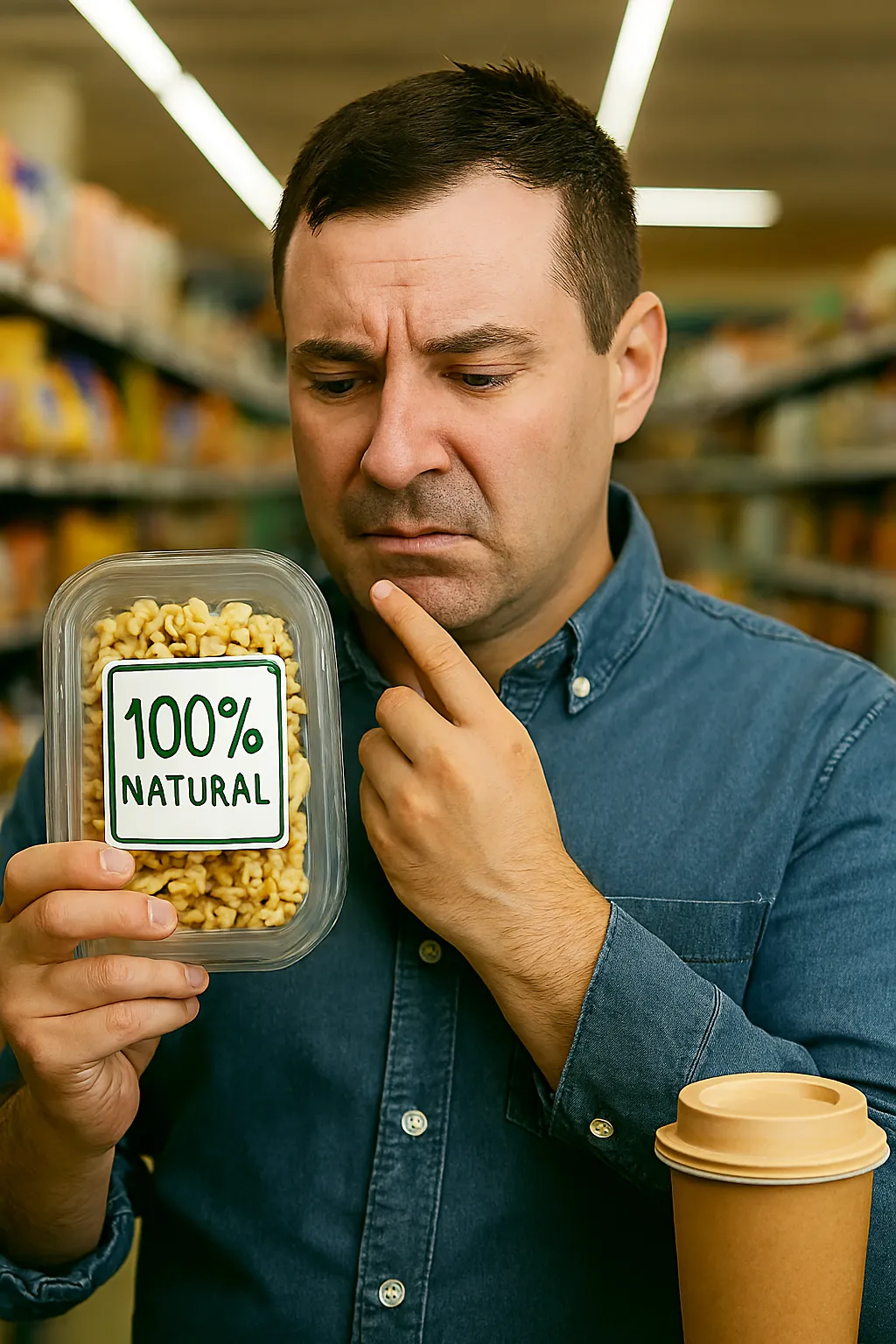
Have you ever stood in the supermarket aisle staring at a label and thinking... "And what is this?" If you've ever bought something that said "100% natural" and when you got home, you discovered ingredients you didn't want — like GMO or animal derivatives — read on.
Just because a product says "natural" or "healthy" doesn't mean it's suitable for those who watch their weight or follow a vegan diet. Learning to read labels is key, because many brands use marketing techniques to make us believe that a product is better than it really is. With so many deals and colorful wraps, it can be hard to choose. But one of the most important criteria should be: what does it contain?
Beautiful words, hidden traps
Terms like "natural," "plant-based," or "cruelty-free" sound good, but they don't always mean what we think. Here are some ingredients that may confuse you:
- Casein, whey, lactose, → dairy products
- Gelatin, collagen, → obtained from animal bones and skin
- Honey, wax, gum → can come from bees
- L-cysteine → possibly derived from feathers or hair
- Carmine or mealybug → extracted from insects
If you see words that are rare or difficult to pronounce, stop and check. Nowadays, with your cell phone in hand, it's easier than ever.
Nutrition: Beyond Vegan
Being vegan is not necessarily synonymous with healthy. There is vegan junk food. Therefore, check the nutritional table:
- Serving size: Does the package have more than one?
- Calories: per serving or per package?
- Macronutrients: proteins, carbohydrates, fats
- Fiber and added sugars
- Micronutrients: iron, calcium, vitamins
The key is in balance: more whole foods, less ultra-processed. Cooking at home, even if it is processing, is different from what factories do. Roasting, boiling, baking – it's all a good process. Always remember to wash and disinfect raw foods.
Practical tips: 3-step method
- Look for certifications: vegan, organic, GMO-free seal
- Scans the ingredient list: detects allergens and animal derivatives
- Check the nutritional table: what do they use instead of sugar or trans fats?
You can rely on apps such as AptoVegan, LucyVeg, Veggie Alternatives or OK to Shop to scan barcodes.
Remember: the ingredients appear from the highest to the lowest amount. If the first ingredient in a condiment is salt, it's probably more like a seasoned salt. If it is another, then there is more of that, likewise, the last ingredient, even if it is announced with great pomp, would be the one who has the least.
Practical example
You want to buy a plant-based burger.
- It says "vegan" → it has no animal derivatives.
- It contains nuts → if you are allergic, you discard it.
- It's sugar free, but it does have aspartame → if you are phenylketonuric, you leave it.
- It has maple syrup → you evaluate the caloric content.
- Uses dates as a sweetener and they're at the bottom of the list → you get it! (unless the doctor says otherwise).
Practice
The next time you buy a product, try this method and read its label with the knowledge you have, and/or use one of the apps for this purpose. Follow this practice to make sure that what you consume is truly aligned with your values and health.
