
Heal, Save, and Delight: Easy Homemade Recipes for Your Fur Kids
Did you know that what our dogs eat can be just as ethical and healthy as what we choose for ourselves? Today we are going to talk about how a vegan diet for dogs can be safe, practical and consistent with our values.
What's really in the "meat" of many commercial pet foods?
Under the label of "meat" may be hidden low-quality by-products, dangerous contaminants, or undeclared ingredients. Here are some of the most documented risks:
Toxic substances
Aflatoxins: toxins from molds in cheap cereals. They can cause serious liver damage and have led to mass recalls in the U.S.
Melamine: Fraudulently added in 2007 to simulate protein. It generated kidney failure in thousands of pets and a worldwide recall.
Heavy metals: lead, mercury or arsenic detected in foods with ingredients unfit for human consumption.
Bacterial contamination
Salmonella: affects both animals and humans who handle food.
Listeria: can cause serious infections in pets and risk to people.
Nutritional problems
Nutrient imbalance: deficiencies such as lack of taurine, related to cardiomyopathies in dogs.
Poorly dosed vitamins and minerals: both excess and deficiency are harmful. Example: A batch in New Zealand with little thiamine caused neurological problems in cats.
Undeclared ingredients
Hidden proteins: substitution of "chicken" for other meats, with risk for allergic pets.
Horse meat: scandal in Europe for not declaring it on labels.
Low-quality animal by-products
Excessive use of feathers, beaks or hooves, with little nutritional value.
Poor quality meat meal, even from sick animals.
Given this, many people decide, either out of their own conviction, for the health of their dogs or for economy, to give their pets homemade food. You don't need to be a great chef to cook some vegetables and legumes and mix them in a container. If you can, get your dog used to it from puppyhood. They usually prefer fresh food, which is not only delicious but also nutritious.
Recommended homemade ingredients that provide adequate nutrition
Whole grains: rice, oats, amaranth.
Local legumes: black beans, lentils, chickpeas.
Accessible vegetables: sweet potato, pumpkin, carrot, broccoli.
Superfoods: chia, amaranth, turmeric, blueberries.
Essential nutrients to include
Use the recommended amounts on the labels or ask your doctor.
Taurine: it is not in plants, it is added as a vegan synthetic supplement.
L-Carnitine: the body synthesizes it from lysine and methionine (legumes, seeds, cereals), but in dogs it is advisable to supplement.
Vitamin B12: Bacterial only, obtained from supplements or fortified nutritional yeast.
Digestive enzymes: papaya (papain), pineapple (bromelain), mango and banana (amylases), miso and ginger (fermentative enzymes).
Easy recipes (use organic versions when you can):
Sweet Potato and Lentil Stew: cooked sweet potato, lentils, grated carrot, flaxseed oil, taurine supplement, and B12.
Brown rice with chickpeas and broccoli: simple, nutritious, with fortified nutritional yeast.
Tofu or soy (STP or VTP) with pumpkin and quinoa: complete vegetable protein, with L-carnitine supplementation. (Just hydrate the soy)
Add papaya or fresh pineapple as a dessert for digestive enzymes.
Precautions and monitoring
Forbidden foods: chocolate, onion, garlic, grapes, raisins, avocado, macadamia nut, xylitol.
Introduce the diet gradually over 10 days.
Monitors energy, coat, and digestion.
Remember: every dog is unique, some thrive better than others on a vegan diet.
The amount of food and nutrients depends on her size, age, activity level, and reproductive status (for example, if she is female and pregnant). Consult your veterinarian, especially if your pet has a medical condition.
Practical recommendations
Frequency: two meals a day (breakfast and lunch) and take him for a walk.
Avoid overfeeding: obesity can reduce your dog's life expectancy by up to 20%.
Rewards: no more than two a day or 10% of your caloric intake.
In training, use tiny treats or part of your daily ration.
Opt for natural snacks: seedless apple chunks, carrots, or blueberries (crushed for small dogs or frozen as "ice cream" on hot days).
Recommended portions of homemade food
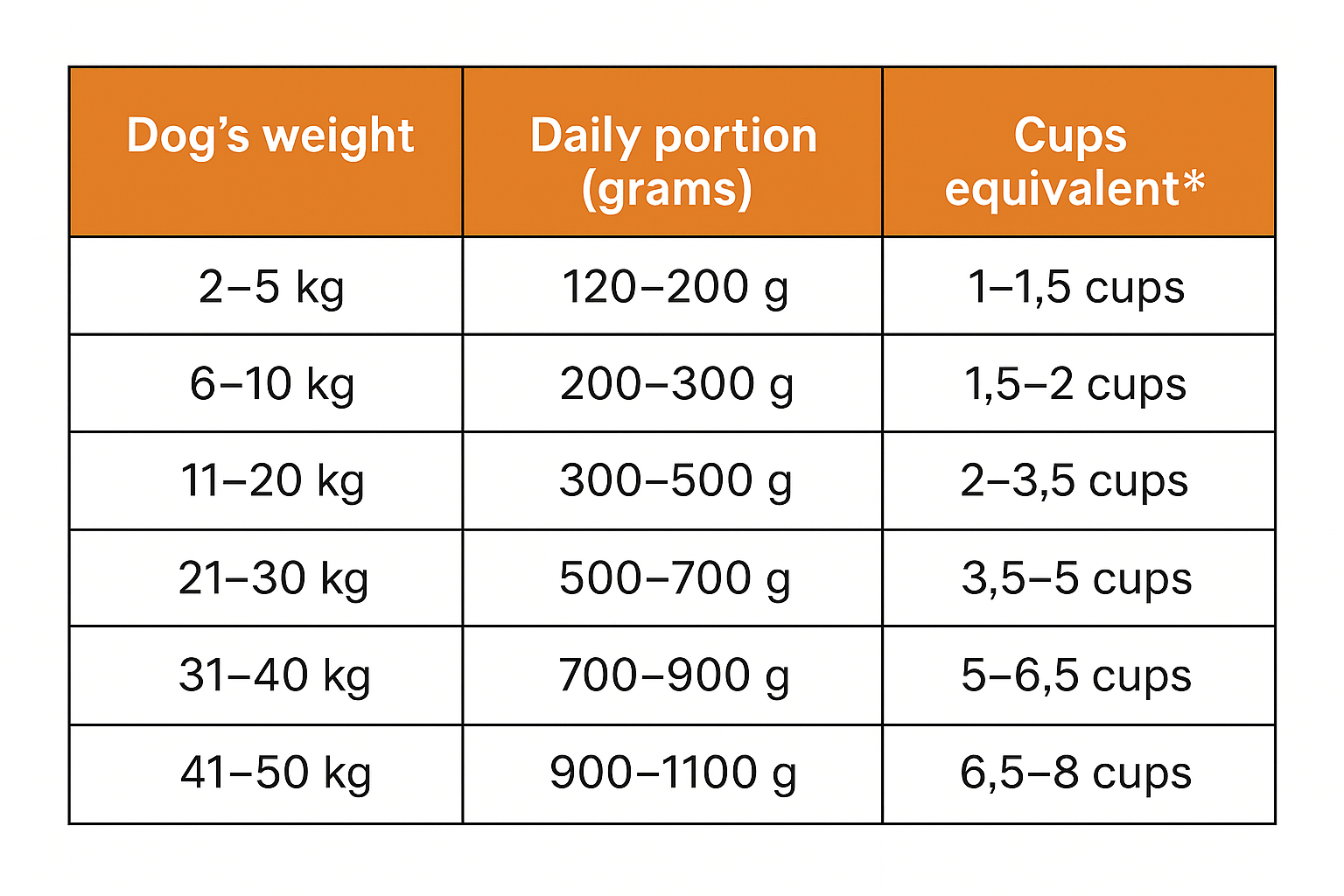
*1 cup ≈ 120 g of cooked homemade food (mixture of legumes, cereals and vegetables).
Recommended nutrient distribution:
40–50% complex carbohydrates (brown rice, oatmeal, sweet potato).
30–40% vegetable proteins (lentils, chickpeas, tofu, quinoa).
10–15% assorted vegetables (broccoli, carrots, pumpkin).
5–10% healthy fats (flaxseed oil, chia seeds, algae).
Supplements: taurine, L-carnitine, vitamin B12. Use recommended doses.
Source: Adapted from the WSAVA Global Nutrition Guidelines.
Despite belief to the contrary, dogs can thrive by eating plants and also avoid countless risks of diseases and allergies. It also helps prevent obesity and manage chronic diseases, including diabetes. A canine vegan diet is possible, ethical and healthy if it is well planned.
Look for good quality vegan brands or prepare their food yourself along with your own, all you have to do is cook, add supplements and stir. It's a good idea to make batches of 5-7 days to have enough for the week
Try it: your dog will love your food and will live healthier and happier!
All animals, not just dogs, deserve compassion and respect. Eating a conscious diet, without sacrifices will help us prevent and reduce the risk of diseases in both people and pets and together, heal the planet.
