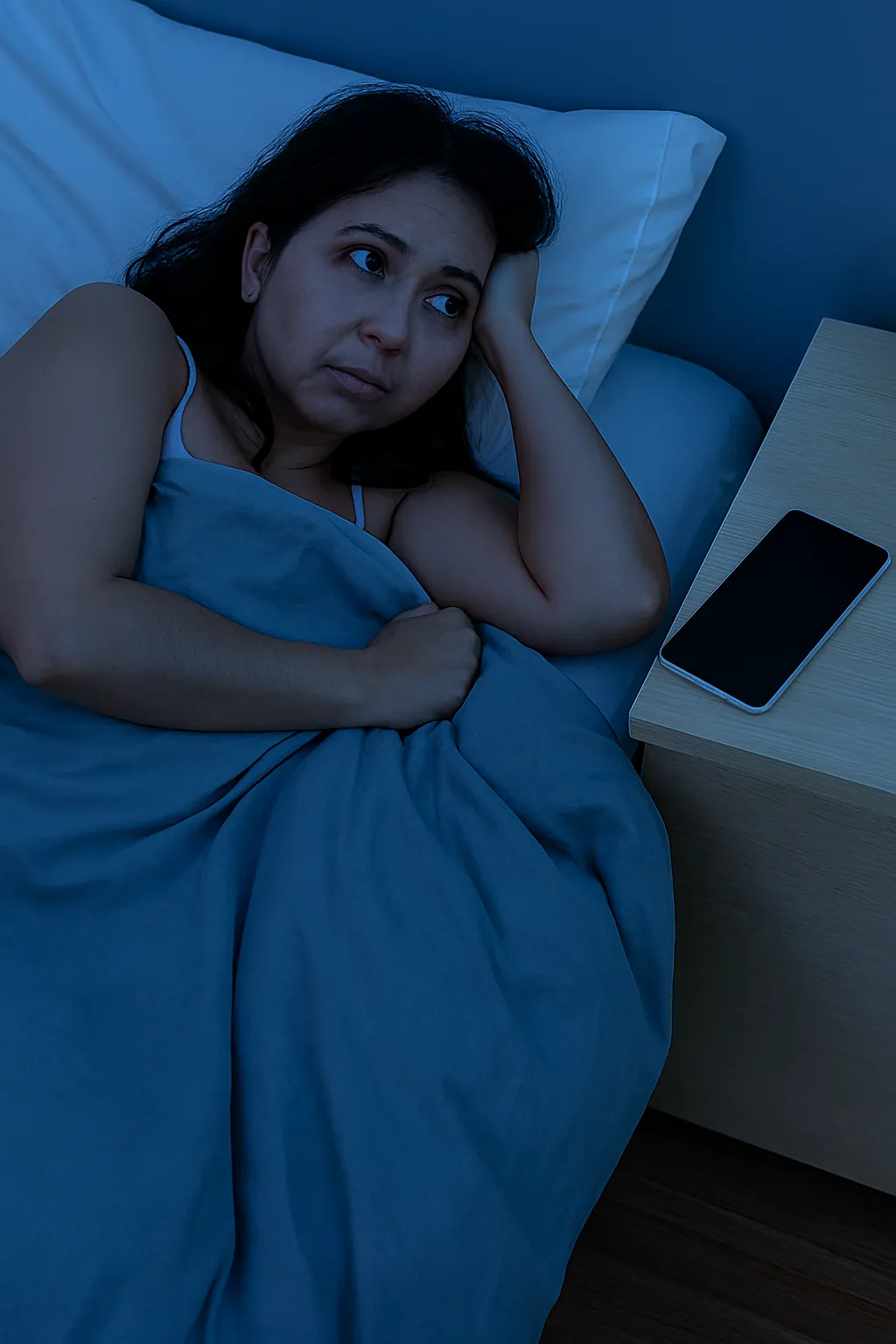
Everything you need to know to sleep better after 40 without resorting to hormones or pills
… and using only natural foods
If you've ever spent the night awake, you know how frustrating it is to toss and turn, not wanting to get up for fear of clearing your head anymore... until little birds announce the dawn. After the age of 40, many women wake up several times in the early morning or suffer from insomnia due to menopausal symptoms. But this problem is not exclusive to them: it also affects men and even boys. That's why it's key to limit time in front of screens, video games, and cell phones before bed.
Millions of people live with sleep disorders, which can lead to irritability, poor health, and risk of chronic disease. If you don't want —or can't—turn to oral hormones, there are natural alternatives and habits that can help.
Create a nightly ritual
Sleeping well depends a lot on your routines and the environment. Going to bed and waking up at the same time every day (yes, even weekends) trains your body to sleep better. Before you get into bed, treat yourself to a moment of calm: a hot bath, meditation, or reading (better if it's boring!) Your brain needs clear signals that it's time to slow down.
Your room should be dark, cool, and quiet. The ideal sleeping temperature is between 16 and 20 °C. If after 20 minutes you can't sleep, get up and do something quiet, like knitting or listening to relaxing music. Go back to bed when sleep returns.
Avoid what disrupts sleep
Caffeine, nicotine, and alcohol can disrupt your rest. Although alcohol makes you drowsy, it alters the quality of sleep.
Avoid liquids before bed so you don't have to get up to the bathroom.
Exercise regularly, but not right before bed.
If you take naps, keep them short (maximum 20 minutes) and never in the afternoon.
Regulate your biological clock
Natural light in the morning helps synchronize your circadian rhythm. When you wake up, look out the window and let the sun caress your face. Screen light has the opposite effect, confusing your body. Turn off cell phones, tablets, and computers at least an hour before bedtime. Ideally, leave your cell phone outside the room.
Empty your mind
If you are used to ruminating on thoughts in bed, have a notebook handy to write down pending issues, worries or ideas. This frees up your mind and makes it easier to rest.
Nutrients that help with sleep
Fiber → to make sleep deeper. E.g. oatmeal and legumes.
Folate → to reduce insomnia. E.g. kiwis and avocado.
Complex carbohydrates → to generate serotonin and calmness. E.g. brown rice and oatmeal.
Isoflavones → to promote hormonal balance. E.g. tofu or textured soy.
Magnesium → for relaxing muscles. E.g. pumpkin seeds and almonds
Tryptophan and melatonin →to regulate the sleep cycle. E.g. pistachios, cherries and mushrooms.
Relaxing drinks
Chamomile tea: soothes and improves sleep.
Tart cherry juice: natural source of melatonin.
Lemon balm or valerian infusion: relaxes body and mind, useful in menopause.
Lavender: even its aroma helps you sleep.
Ashwagandha: regulates cortisol and improves menopausal symptoms.
Make your own ritual: a cup of tea, low lights, and zero cell phone.
Light Dinner Ideas (2 Hours Before Bedtime)
Vegetable broth with quinoa
Lettuce salad with berries
Oatmeal smoothie or yogurt with pistachios and cherries
Avocado sandwich (see recipe in the article "Express, Nutritious and Delicious Breakfasts")
Sleeping well is not a luxury; it is a necessity. And as you can see, it's in your hands... or rather, on your plate.
