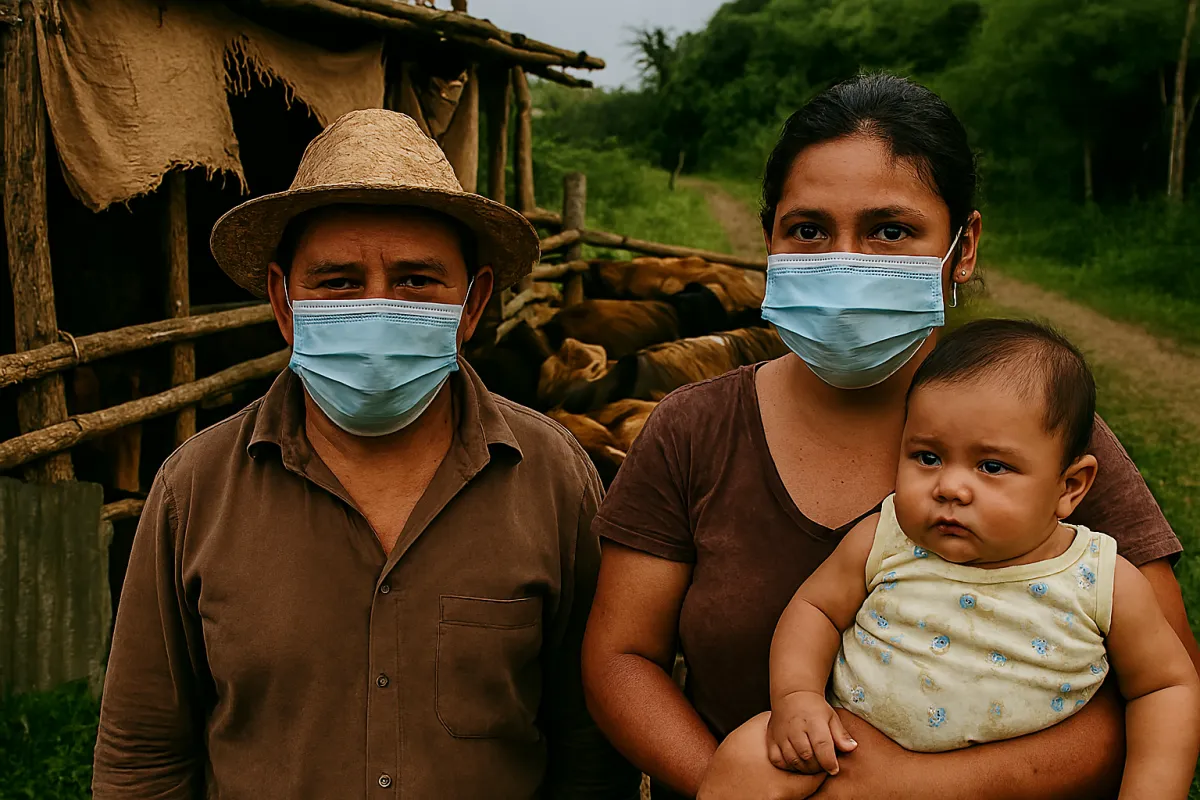
Viral resurgence, animal revenge
This winter, health authorities are facing a disturbing scenario: diseases that we thought had been eradicated are reemerging, new zoonoses, that is, microorganisms that pass from animals to humans, and active pests such as screwworms, threaten both fauna and humans. Influenza and post-COVID persist, measles and the Nipah virus threaten to spread. We must prevent the conditions that cause infections instead of medicating, treating and killing sick animals or their vectors.
Find out why these infections are returning, what their consequences are, and how we can protect ourselves with real and sustainable solutions.
Diseases that reemerge
· Screwworm: More than 14,500 cases to date in fauna in 14 affected states, mainly in southern and southeastern Mexico, a latent threat capable of affecting humans.
· Measles: Mexico reports active transmission in 2026, mainly in children aged 1-4 years with 1,097 cases to date and thousands more in North America.
· Seasonal influenza: more than 2,300 confirmed cases and 7 deaths in Mexico in January 2026, with H1N1 and H3N2 strains dominating.
· Long COVID: affects between 10% and 20% of those who are infected, with prolonged symptoms that impact daily life.
· Nipah virus: outbreak in India with 5 confirmed cases and a lethality that can exceed 70%. Classified as a high-priority pathogen due to its epidemic potential
Common root: zoonosis and animal exploitation
Most of these diseases originate from human interaction with animals:
o Nipah: bats and pigs.
o Screwworm: cattle, sheep and horses.
o Influenza: birds and pigs as reservoirs.
o COVID: live animal markets.
o Measles: although today it affects humans, its history dates back to cattle.
Animal exploitation creates conditions for viruses and parasites to cross the species barrier.
Catastrophic consequences
· Outbreaks that saturate hospitals and health systems.
· Economic and social impact of quarantines and deaths.
· Risk of new global pandemics if animal exploitation is not controlled.
In addition, global warming is an accelerator of zoonoses, through several critical mechanisms according to recent research:
· Forced migration of species: As their habitats warm, thousands of animal species move to colder areas, creating viral exchange points, making it easier for unknown pathogens to jump between species.
· Vector expansion: Rising temperatures allow mosquitoes, ticks, and other disease-carrying insects to survive where it was once too cold.
· Alteration of biological cycles: Heat accelerates the life cycle of parasites and pathogens within their hosts, increasing the speed of transmission and the viral load in ecosystems.
· Loss of biodiversity: As fewer species remain, humans come into direct contact with the most resistant reservoirs (such as rodents or bats).
· New climate vulnerabilities: Extreme events such as floods or droughts force humans and animals to share scarce and contaminated water sources, increasing the risk of epidemic outbreaks.
The solution: respect and prevention
Consider a plant-based diet, because there are so many other things to eat, wear, and smear on your skin that don't suffer, cry, or scream and that respect the environment, don't pollute, and can reproduce without pain. Some of the many advantages of adopting an animal-free diet rich in fruits, vegetables, legumes, herbs, mushrooms, algae, cereals, nuts and seeds are:
· Reduction of zoonoses: by eliminating animal breeding and consumption, pathogen reservoirs are reduced.
· Environmental and health impact: less animal overcrowding, fewer antibiotics, lower risk of pandemics.
· Practical prevention: a vegan diet strengthens human health and prevents animal exploitation.
Adopting a diet free of animal products is not only an act of compassion, but also a public health strategy. By reducing animal exploitation, pathogen reservoirs and opportunities for new pandemics decrease.
The resurgence of diseases such as measles, influenza, Nipah, COVID, and screwworm reminds us that human health depends on respecting animal life.
What more do you need to encourage you to adopt a delicious, healing and saving mindful diet, without sacrifices? Don't wait any longer, time is of the essence.
